 Nutrition
Protein foods for menopause: protecting muscle, strength and appetite
How much protein-rich food to include, how to spread it through the day, and practical vegetarian and non-vegetarian choices.
Tap a card to reveal the answer. Start here, then read deeper whenever you are ready.
Why protein deserves attention in midlife
Muscle naturally becomes harder to maintain with age, particularly without resistance exercise and adequate food. Menopause is not the only cause, but the transition often coincides with poorer sleep, reduced activity, dieting or injuries. Protein supplies amino acids used to repair and maintain tissue, while strength training gives the muscle a reason to adapt.
Protein also makes meals more satisfying and can soften the sharp hunger that follows a mostly refined-carbohydrate meal. It is not a weight-loss drug and more is not endlessly better. The practical aim is an adequate amount distributed across meals, alongside vegetables, whole grains, fruit and healthy fats.
Indian protein foods and realistic portions
Useful vegetarian sources include dal, chana, rajma, lobia, soybeans, tofu, tempeh, milk, curd, paneer, nuts and seeds. Eggs, fish, chicken and other lean meats add options for women who eat them. Cereals contain some protein too, but rice or roti alone rarely provides a substantial meal-sized portion. Combining grains and pulses across the day supports amino-acid variety.
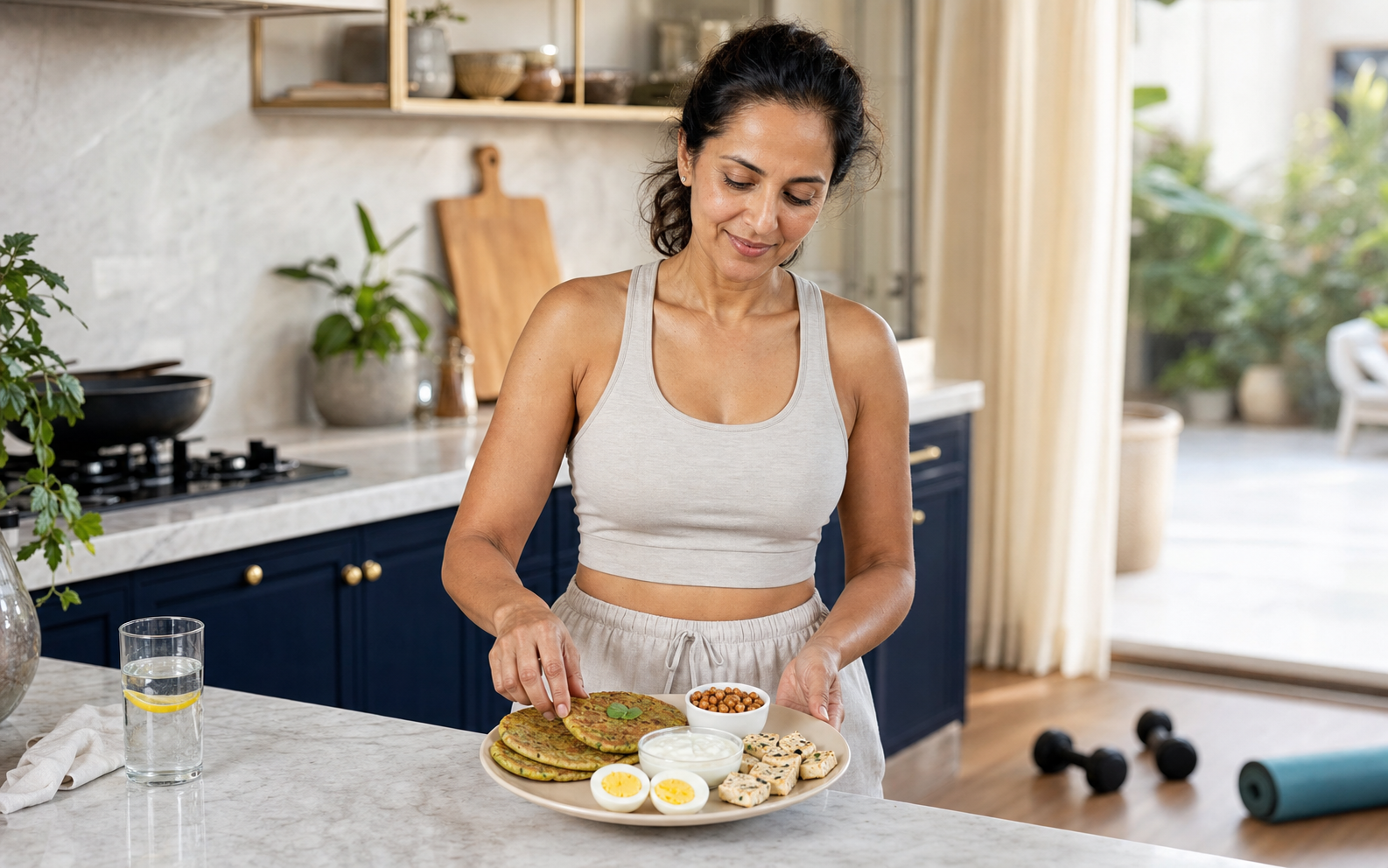
Try one cup of thick curd with breakfast, dal plus another protein at lunch, and tofu, paneer, eggs, fish or chicken at dinner. Roasted chana, unsweetened lassi, milk, sprouts or a boiled egg can be convenient snacks. Portions should reflect total energy needs, kidney health, appetite and preferences; there is no requirement to force a large serving at every sitting.
Spread protein instead of saving it for dinner
Many women eat little protein at breakfast, some dal at lunch and most protein at dinner. A steadier distribution creates repeated opportunities for muscle protein synthesis. Add besan or moong chilla, eggs, Greek-style or hung curd, milk, tofu bhurji or leftover dal to the morning. At lunch, do not let two teaspoons of dal be the only protein on a large rice plate.
Pair the food pattern with two or more weekly strength sessions adapted to your ability. Sit-to-stands, wall push-ups, rows, step-ups and loaded carries count when progressed safely. Protein powder can be convenient when food intake is difficult, but it is optional. Check ingredient, dose, added sugar, quality testing and kidney or medicine considerations before using it.
How to make the advice personal
Menopause does not create one compulsory diet. Your needs depend on appetite, activity, muscle mass, bone risk, blood pressure, glucose, lipids, digestive symptoms, medicines, allergies, culture, budget and whether you eat vegetarian or non-vegetarian food. Begin with familiar meals and improve their balance instead of buying a shelf of products labelled for menopause.
Change one variable at a time when you are testing a symptom trigger. A simple record of food timing, caffeine, alcohol, symptoms, sleep and bowel pattern is more useful than a long forbidden-food list. If eating has become fearful, highly restrictive or tied to bingeing, purging or rapid weight change, seek qualified support rather than intensifying the rules.
Safety, medicines and when to seek help
Food supports health but cannot replace assessment or prescribed treatment. Diabetes, kidney disease, liver disease, coeliac disease, inflammatory bowel disease, osteoporosis, anaemia and cancer treatment can change what is safe. Warfarin, thyroid medicine, some antibiotics and other medicines may need specific timing or consistency around foods and supplements. Review major changes with a doctor or registered dietitian.
Seek prompt care for difficulty swallowing, blood in stool or vomit, persistent vomiting, severe abdominal pain, dehydration, unexplained weight loss, a new breast lump, chest pain or symptoms of very high or low blood glucose. Vaginal bleeding after twelve months without a period also needs assessment. This guide is education, not a diagnosis or personalised nutrition prescription.
Frequently asked questions
How much protein do women need in menopause?
Needs vary with body size, activity, age and health. A dietitian can translate a suitable daily target into meals, especially with kidney disease or low intake.
Which vegetarian foods have protein?
Dal, beans, chickpeas, soy, tofu, tempeh, milk, curd, paneer, nuts and seeds all contribute.
Is protein powder necessary?
No. It is a convenience, not a requirement. Food can meet needs for many women.
Does protein prevent menopause weight gain?
Protein can support satiety and muscle, but body weight is influenced by total intake, activity, sleep, medicines and health conditions.
Sources behind this guide
- ICMR-NIN Dietary Guidelines for Indians 2024 ↗
- World Health Organization: Healthy diet ↗
- NIH Office of Dietary Supplements: Calcium ↗
- NIH Office of Dietary Supplements: Vitamin D ↗
- The Menopause Society: Nonhormone Therapy Position Statement ↗
- American Heart Association: Mediterranean-style eating pattern ↗
- NICE: Menopause identification and management ↗
Editorial foundation: Stri.life research guides, Menopause in India Overview and Comprehensive Guide to Perimenopause, reviewed August 2026.
Conversation 0