 Nutrition
High-fibre foods in menopause: gut, cholesterol and blood sugar support
How vegetables, fruit, dal, beans, oats, millets and seeds support health, plus how to increase fibre without worsening bloating.
Tap a card to reveal the answer. Start here, then read deeper whenever you are ready.
What fibre does and does not do
Fibre is the part of plant food that is not fully digested in the small intestine. Different fibres add stool bulk, hold water, are fermented by gut microbes, slow carbohydrate absorption or help lower LDL cholesterol. Vegetables, fruit, legumes, whole grains, nuts and seeds provide overlapping types, which is why variety is more useful than chasing one powder.
Fibre is not a detox and it does not cancel the rest of a meal. During midlife it can support bowel regularity, fullness, glucose response and cardiovascular health, but suddenly doubling intake can cause gas, cramps or constipation when fluid is inadequate. Increase gradually and pay attention to tolerance.
Indian foods that make fibre practical
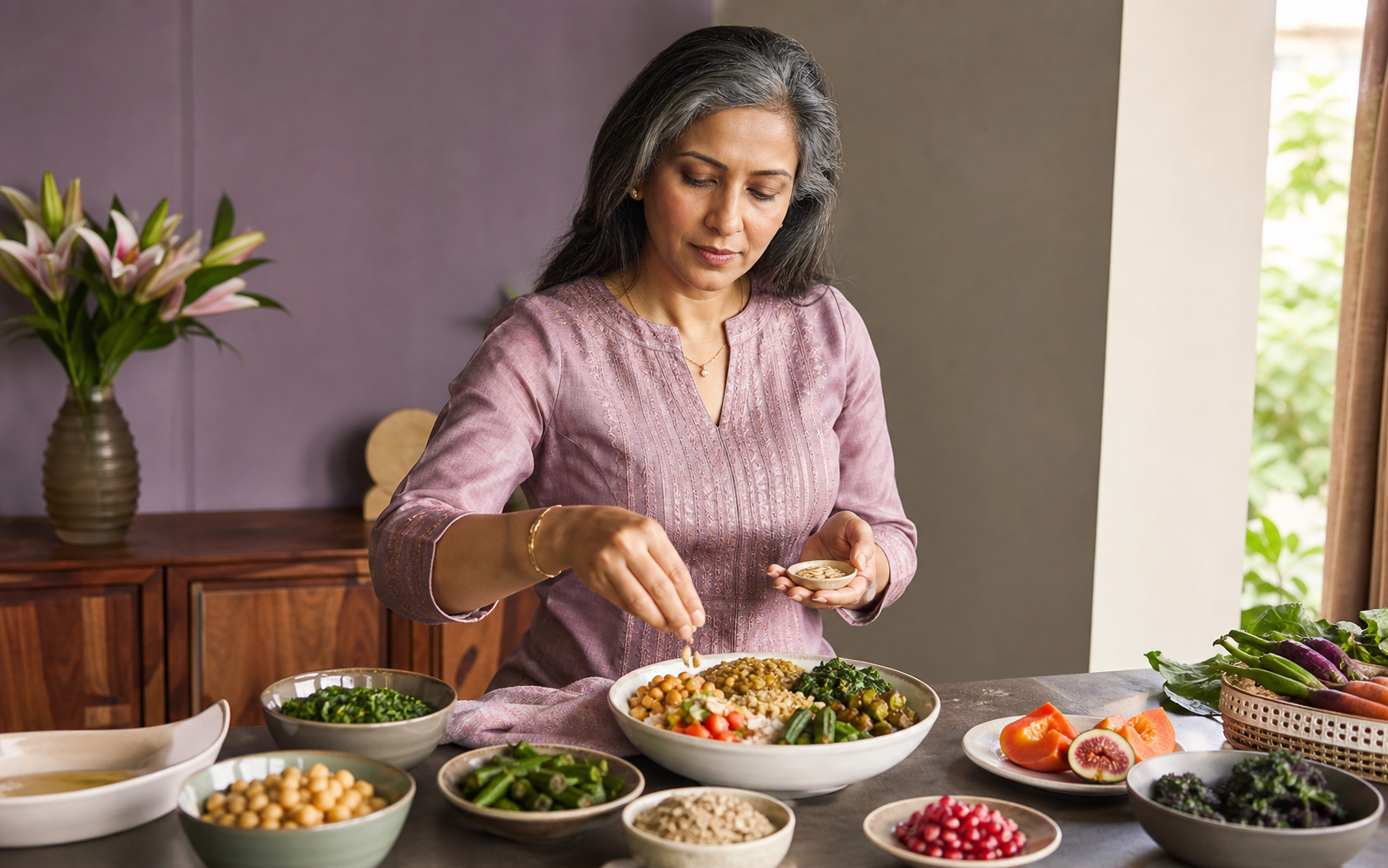
Dal, chana, rajma, lobia and sprouts are strong anchors. Add okra, gourds, beans, cauliflower, carrots, greens and seasonal vegetables; choose whole fruit rather than relying on juice. Oats, barley, whole-wheat roti, brown rice and millets can add variety, though millet is not automatically superior to every other grain. Nuts, chia, flax and sesame contribute in smaller servings.
Upgrade familiar meals rather than creating a separate diet: add vegetables to poha or upma, make sambar generous with vegetables, mix beans into chaat, serve fruit with curd, add dal to khichdi, and keep salad or cooked vegetables beside roti and sabzi. If raw foods worsen bloating, cooked vegetables are still valuable. Washing and soaking beans, beginning with smaller amounts and increasing slowly may improve tolerance.
Constipation, bloating and the microbiome
Constipation can be influenced by low fibre, low fluid, inactivity, medicines, pelvic-floor dysfunction, thyroid disease and bowel disorders. Fibre helps many people but not every type of constipation responds to more roughage. Severe pain, vomiting, blood, anaemia, unexplained weight loss or a persistent new bowel change needs medical assessment.
Fermented foods such as curd, idli or dosa batter can fit a healthy pattern, but no single probiotic food has been proven to reset a menopause microbiome. Choose foods you tolerate and can store safely. If irritable bowel symptoms are substantial, a registered dietitian can guide a structured, time-limited approach without creating unnecessary long-term restriction.
How to make the advice personal
Menopause does not create one compulsory diet. Your needs depend on appetite, activity, muscle mass, bone risk, blood pressure, glucose, lipids, digestive symptoms, medicines, allergies, culture, budget and whether you eat vegetarian or non-vegetarian food. Begin with familiar meals and improve their balance instead of buying a shelf of products labelled for menopause.
Change one variable at a time when you are testing a symptom trigger. A simple record of food timing, caffeine, alcohol, symptoms, sleep and bowel pattern is more useful than a long forbidden-food list. If eating has become fearful, highly restrictive or tied to bingeing, purging or rapid weight change, seek qualified support rather than intensifying the rules.
Safety, medicines and when to seek help
Food supports health but cannot replace assessment or prescribed treatment. Diabetes, kidney disease, liver disease, coeliac disease, inflammatory bowel disease, osteoporosis, anaemia and cancer treatment can change what is safe. Warfarin, thyroid medicine, some antibiotics and other medicines may need specific timing or consistency around foods and supplements. Review major changes with a doctor or registered dietitian.
Seek prompt care for difficulty swallowing, blood in stool or vomit, persistent vomiting, severe abdominal pain, dehydration, unexplained weight loss, a new breast lump, chest pain or symptoms of very high or low blood glucose. Vaginal bleeding after twelve months without a period also needs assessment. This guide is education, not a diagnosis or personalised nutrition prescription.
Frequently asked questions
Which foods are highest in fibre?
Beans, chickpeas, lentils, vegetables, whole fruit, whole grains, nuts and seeds are useful sources. Variety matters.
Why does fibre make me bloated?
A rapid increase gives gut microbes more fermentable material. Increase gradually, drink appropriately and adjust the type and portion.
Is fruit too sugary during menopause?
Whole fruit contains fibre and nutrients and can fit most healthy patterns. Diabetes may require individual portion and timing advice.
Should I take a fibre supplement?
Food is a useful first step. Supplements can help selected problems but need enough fluid and may affect medicine absorption.
Sources behind this guide
- ICMR-NIN Dietary Guidelines for Indians 2024 ↗
- World Health Organization: Healthy diet ↗
- NIH Office of Dietary Supplements: Calcium ↗
- NIH Office of Dietary Supplements: Vitamin D ↗
- The Menopause Society: Nonhormone Therapy Position Statement ↗
- American Heart Association: Mediterranean-style eating pattern ↗
- NICE: Menopause identification and management ↗
Editorial foundation: Stri.life research guides, Menopause in India Overview and Comprehensive Guide to Perimenopause, reviewed August 2026.
Conversation 0