 Nutrition
Foods to eat during perimenopause and menopause: an Indian plate that works
A realistic, evidence-led way to build breakfast, lunch, dinner and snacks for steadier energy, muscle, bone and heart health.
Tap a card to reveal the answer. Start here, then read deeper whenever you are ready.
The short answer
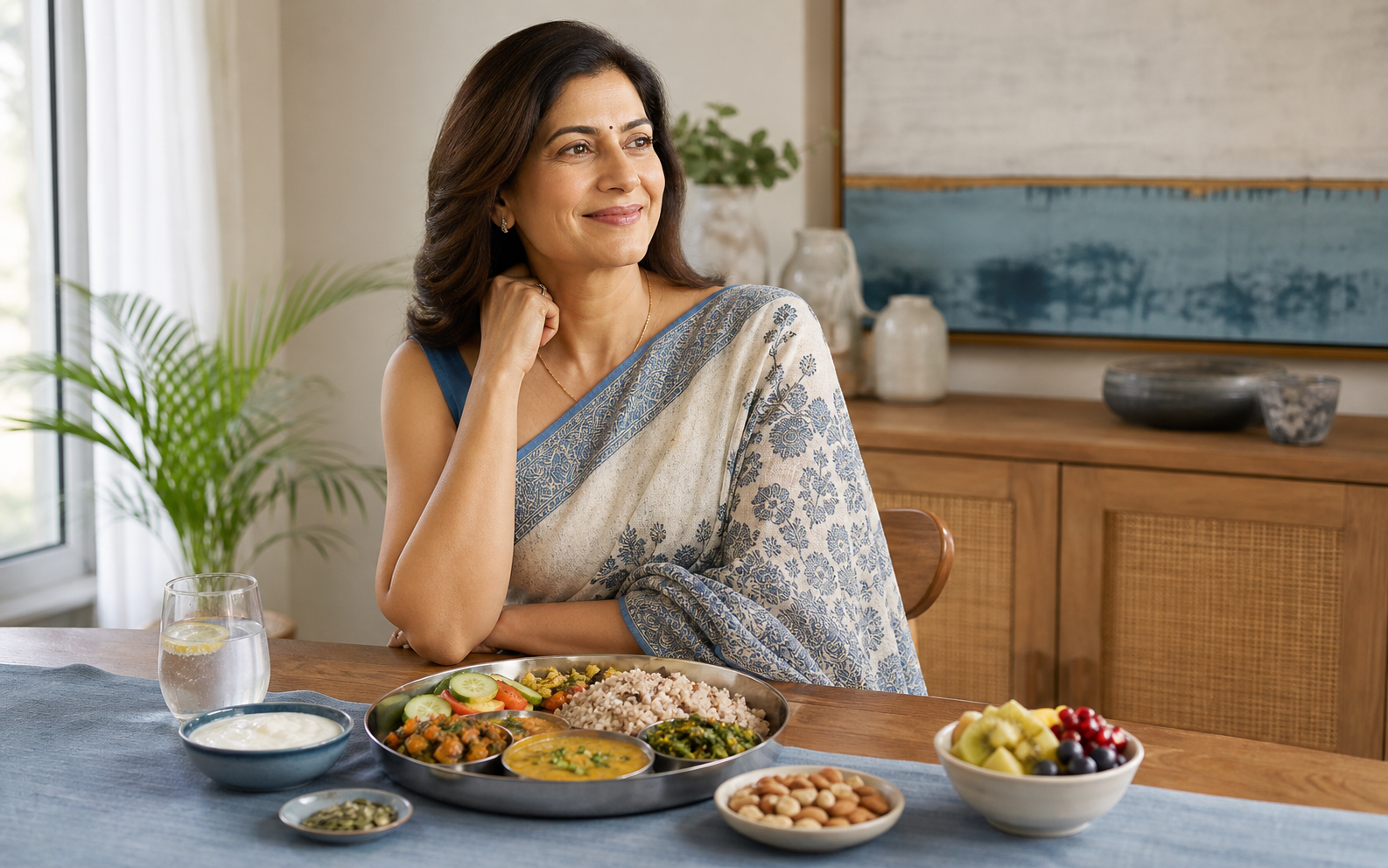
Build most meals from four parts: plenty of vegetables, a protein food, a high-fibre carbohydrate and a small amount of unsaturated fat. A familiar plate could be sabzi plus dal, roti or rice, curd and salad; sambar with vegetables and idli; fish with rice and greens; or tofu with millet and mixed vegetables. Fruit, nuts, seeds and unsweetened dairy or fortified alternatives can fill gaps between meals.
This pattern matters more than any single superfood. It provides protein for muscle, calcium and vitamin D sources for bone, fibre for bowel and metabolic health, and fats from nuts, seeds, fish and oils for cardiovascular health. It also leaves room for taste, celebration and regional food. Menopause nutrition should make everyday eating more dependable, not turn it into a test of discipline.
Build a menopause-friendly Indian plate
Start with vegetables because volume, colour and variety make the plate nutrient-dense. Add dal, chana, rajma, soy, paneer, curd, eggs, fish or lean meat as the protein anchor. Choose roti, brown or parboiled rice, oats, millets or another whole grain in an amount that suits hunger and glucose needs. Add a spoon of seeds, a few nuts or modest cooking oil rather than treating fat as forbidden.
A vegetarian lunch might be palak chana, two small rotis, cucumber raita and guava. A non-vegetarian option might be grilled fish, rice, beans poriyal and curd. Breakfast could be besan chilla with curd, vegetable poha with peanuts plus an egg, oats with milk and fruit, or dosa with sambar. The protein addition is what often makes a carbohydrate-led breakfast last longer.
A seven-day framework without a rigid menu
Instead of prescribing seven perfect days, rotate components. Keep two dals or beans cooked, wash vegetables, portion curd, roast nuts and prepare one chutney. On busy days combine leftovers: dal becomes a soup, sabzi fills a chilla, rice joins curd and vegetables, and eggs or tofu make a fast protein. Frozen peas, canned beans with low salt and pre-cut vegetables are legitimate supports.
At each meal ask three questions: where is the protein, where are the plants, and what will make this satisfying? If the answer is only tea and biscuits, add dahi, an egg, roasted chana or fruit and nuts. If dinner is very late, a planned evening snack may prevent arriving ravenous. Regularity can be especially helpful when poor sleep makes appetite signals less predictable.
How to make the advice personal
Menopause does not create one compulsory diet. Your needs depend on appetite, activity, muscle mass, bone risk, blood pressure, glucose, lipids, digestive symptoms, medicines, allergies, culture, budget and whether you eat vegetarian or non-vegetarian food. Begin with familiar meals and improve their balance instead of buying a shelf of products labelled for menopause.
Change one variable at a time when you are testing a symptom trigger. A simple record of food timing, caffeine, alcohol, symptoms, sleep and bowel pattern is more useful than a long forbidden-food list. If eating has become fearful, highly restrictive or tied to bingeing, purging or rapid weight change, seek qualified support rather than intensifying the rules.
Safety, medicines and when to seek help
Food supports health but cannot replace assessment or prescribed treatment. Diabetes, kidney disease, liver disease, coeliac disease, inflammatory bowel disease, osteoporosis, anaemia and cancer treatment can change what is safe. Warfarin, thyroid medicine, some antibiotics and other medicines may need specific timing or consistency around foods and supplements. Review major changes with a doctor or registered dietitian.
Seek prompt care for difficulty swallowing, blood in stool or vomit, persistent vomiting, severe abdominal pain, dehydration, unexplained weight loss, a new breast lump, chest pain or symptoms of very high or low blood glucose. Vaginal bleeding after twelve months without a period also needs assessment. This guide is education, not a diagnosis or personalised nutrition prescription.
Frequently asked questions
What is the best food for menopause?
There is no single best food. A varied pattern rich in vegetables, fruit, legumes, whole grains, protein, calcium sources and unsaturated fats provides broader benefit.
Can I eat rice during menopause?
Yes. Portion, preparation and the rest of the plate matter. Pair rice with protein and vegetables; choose higher-fibre varieties when practical.
Do I need special menopause foods?
Usually not. Familiar minimally processed foods can meet most needs. Fortified foods or supplements are useful only in selected situations.
What should I eat for breakfast?
Choose a breakfast with protein and fibre, such as besan chilla with curd, eggs with vegetables, oats with milk and fruit, or idli with vegetable-rich sambar.
Sources behind this guide
- ICMR-NIN Dietary Guidelines for Indians 2024 ↗
- World Health Organization: Healthy diet ↗
- NIH Office of Dietary Supplements: Calcium ↗
- NIH Office of Dietary Supplements: Vitamin D ↗
- The Menopause Society: Nonhormone Therapy Position Statement ↗
- American Heart Association: Mediterranean-style eating pattern ↗
- NICE: Menopause identification and management ↗
Editorial foundation: Stri.life research guides, Menopause in India Overview and Comprehensive Guide to Perimenopause, reviewed August 2026.
Conversation 0