 Nutrition
Calcium and vitamin D foods for menopause bone health
A food-first guide to dairy, ragi, tofu, sesame, fish, fortified foods and deciding when testing or supplements may be appropriate.
Tap a card to reveal the answer. Start here, then read deeper whenever you are ready.
Why bone nutrition changes in importance
Bone is living tissue. Oestrogen decline accelerates bone loss around the final menstrual period, while age, family history, early menopause, low body weight, smoking, alcohol, inactivity, steroid medicines and some illnesses can raise fracture risk. Calcium is a structural mineral and vitamin D supports calcium absorption, but neither works alone.
Muscle-strengthening and weight-bearing activity, adequate protein, fall prevention and avoiding tobacco belong in the same plan. A normal blood calcium result does not prove that dietary calcium is adequate, because the body tightly regulates blood levels. Bone risk assessment and, when indicated, bone-density testing answer different questions from a routine chemistry panel.
Food sources available in India
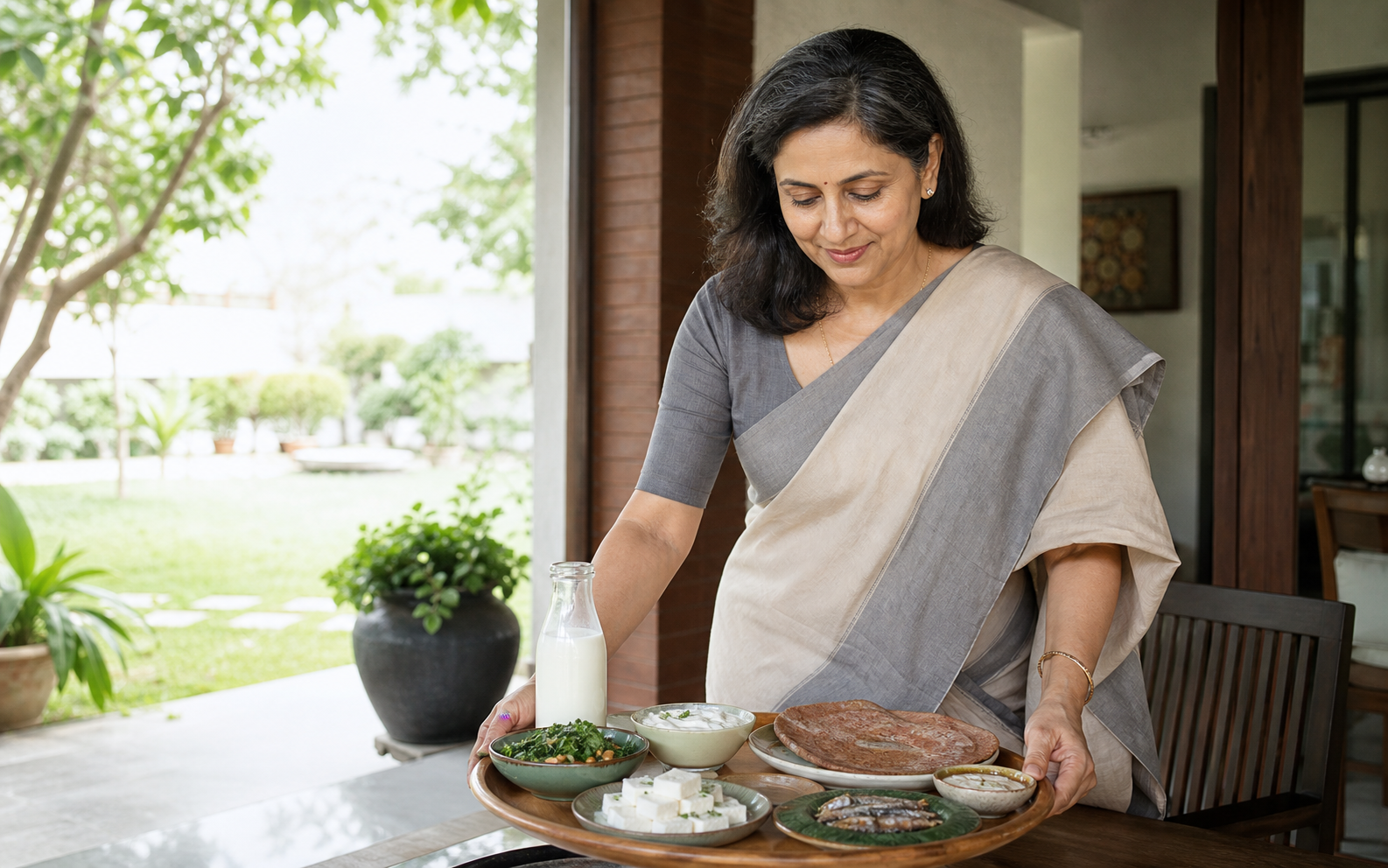
Milk, curd and paneer provide absorbable calcium, though paneer and cheese can also add saturated fat and salt. Fortified plant milks and calcium-set tofu can help when labels confirm the amount. Ragi, sesame, beans, almonds and leafy greens contribute, but serving size and absorption vary. Small fish eaten with bones are rich sources for women who eat fish.
Vitamin D occurs naturally in relatively few foods, including oily fish and egg yolk, and amounts may be modest. Fortified milk or other labelled foods can contribute. Sun exposure varies with skin tone, clothing, air pollution, season, latitude and time outdoors, so living in a sunny country does not guarantee adequate status. Testing is most helpful when clinical risk or symptoms make the result actionable.
Make calcium visible across the day
Rather than relying on one large serving, place calcium sources through the day: milk in oats, curd with lunch, calcium-set tofu at dinner, or ragi alongside other balanced foods. Check labels because homemade and commercial products differ. Sesame chutney is nutritious but a small spoon cannot automatically replace a meaningful dairy or fortified serving.
Supplements may be appropriate when food intake and medical risk leave a gap, but excessive calcium can cause harm and may interact with thyroid medicine, iron and some antibiotics. Vitamin D dosing should reflect individual status and professional advice; very high-dose self-treatment can be toxic. Bring all products to a clinical review, including combination bone, hair and multivitamin tablets.
How to make the advice personal
Menopause does not create one compulsory diet. Your needs depend on appetite, activity, muscle mass, bone risk, blood pressure, glucose, lipids, digestive symptoms, medicines, allergies, culture, budget and whether you eat vegetarian or non-vegetarian food. Begin with familiar meals and improve their balance instead of buying a shelf of products labelled for menopause.
Change one variable at a time when you are testing a symptom trigger. A simple record of food timing, caffeine, alcohol, symptoms, sleep and bowel pattern is more useful than a long forbidden-food list. If eating has become fearful, highly restrictive or tied to bingeing, purging or rapid weight change, seek qualified support rather than intensifying the rules.
Safety, medicines and when to seek help
Food supports health but cannot replace assessment or prescribed treatment. Diabetes, kidney disease, liver disease, coeliac disease, inflammatory bowel disease, osteoporosis, anaemia and cancer treatment can change what is safe. Warfarin, thyroid medicine, some antibiotics and other medicines may need specific timing or consistency around foods and supplements. Review major changes with a doctor or registered dietitian.
Seek prompt care for difficulty swallowing, blood in stool or vomit, persistent vomiting, severe abdominal pain, dehydration, unexplained weight loss, a new breast lump, chest pain or symptoms of very high or low blood glucose. Vaginal bleeding after twelve months without a period also needs assessment. This guide is education, not a diagnosis or personalised nutrition prescription.
Frequently asked questions
Which foods contain calcium?
Milk, curd, some paneer, calcium-set tofu, fortified alternatives, ragi, sesame, beans, selected greens and small fish with bones contribute varying amounts.
Is ragi enough for calcium?
Ragi contributes calcium but should be part of a varied pattern. Absorption and serving size matter.
Do all women need vitamin D supplements?
No. Need and dose depend on risk, diet, exposure, health and sometimes a blood test interpreted by a clinician.
Should I have a bone-density scan?
Screening depends on age and risk factors such as early menopause, fractures, steroid use and low body weight. Discuss individual timing with a clinician.
Sources behind this guide
- ICMR-NIN Dietary Guidelines for Indians 2024 ↗
- World Health Organization: Healthy diet ↗
- NIH Office of Dietary Supplements: Calcium ↗
- NIH Office of Dietary Supplements: Vitamin D ↗
- The Menopause Society: Nonhormone Therapy Position Statement ↗
- American Heart Association: Mediterranean-style eating pattern ↗
- NICE: Menopause identification and management ↗
Editorial foundation: Stri.life research guides, Menopause in India Overview and Comprehensive Guide to Perimenopause, reviewed August 2026.
Conversation 0