 Movement
Muscle loss in menopause: strength training, protein and what sarcopenia really means
Strength can change in midlife, but decline is not inevitable. Build a realistic plan around progressive resistance, adequate food and investigation of unexplained weakness.
Tap a card to reveal the answer. Start here, then read deeper whenever you are ready.
Muscle matters beyond appearance
Muscle supports glucose control, joints, balance, bone loading and the ability to climb stairs, carry shopping or rise from the floor. Sarcopenia means loss of muscle strength, mass and physical function, usually associated with ageing or illness. Midlife weakness should not automatically be labelled menopause because anaemia, thyroid disease, vitamin deficiency, sleep disorders, medication effects and neurological conditions can contribute [1,2].
Research suggests lean mass can change across the menopausal transition, but age, activity, nutrition and health are intertwined. The strongest practical message is not that hormones doom muscle. Postmenopausal women can gain meaningful strength through progressive resistance training [2,3].
Train movements, not punishment
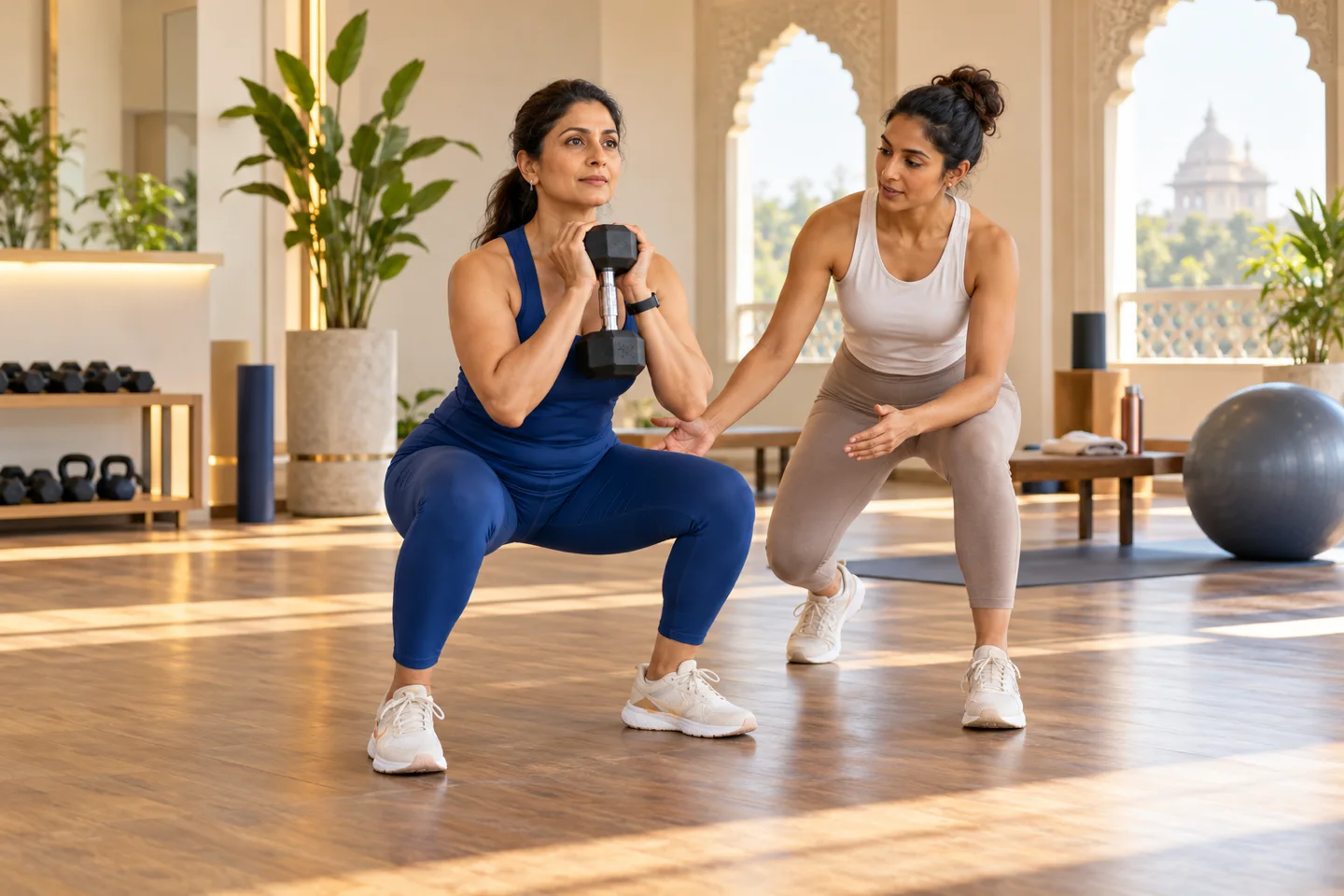
A complete programme trains the major movement patterns: squat or sit-to-stand, hinge, push, pull, carry and calf raise. Start with a load that allows controlled technique and add repetitions or resistance gradually. Two or three sessions a week can be effective when repeated over months. Soreness is not required for progress [3,4].
A trainer should adapt to knee pain, pelvic-floor symptoms, osteoporosis, blood pressure and previous injury rather than use one menopause workout. Stop and seek assessment for chest pressure, faintness, sudden weakness, a hot swollen joint or pain that changes how you walk.
Protein supports training, not replaces it
Protein provides amino acids for repair, but more is not automatically better. Evidence in menopausal women supports resistance exercise more consistently than protein supplementation alone, and trials have not established one universal menopause dose [2,3,5]. Needs vary with body size, total food intake, kidney health, training and illness.
Spread useful protein across meals using foods you enjoy: dal with curd, eggs, paneer, tofu, soybeans, fish, chicken or other suitable choices. Pair breakfast and snacks with protein rather than trying to repair a low-intake day with one large shake. A dietitian can personalise intake during weight loss, vegetarian diets, kidney disease or poor appetite.
Recovery is part of the programme
Muscle adapts between sessions. Keep a consistent wake time, treat disruptive hot flushes or sleep apnoea, eat enough total energy and allow a muscle group time to recover. Aggressive dieting combined with high-volume exercise can undermine strength and increase fatigue.
Creatine has evidence for improving some strength outcomes with resistance training in adults, but results vary and it is not a hormone-balancing treatment. Product quality, kidney disease, medicines and individual goals should be reviewed before use. It cannot compensate for inconsistent training or inadequate food [6].
Measure function, not only weight
Track a repeatable marker such as chair rises, load carried, push-up height or walking pace. Waist and scale weight cannot tell whether you are stronger. Progress may appear first as easier stairs, less back fatigue or confidence lifting luggage.
Seek medical review for rapid unexplained weakness, repeated falls, unintentional weight loss, trouble swallowing, persistent muscle pain or difficulty rising that is worsening. The goal is not a younger body. It is a capable body with reserves for the decades ahead.
Frequently asked questions
Is muscle loss inevitable after menopause?
No. Age and hormones influence muscle, but progressive resistance training can improve strength.
Do I need protein powder?
No. Many women can meet needs through food; individual circumstances vary.
How often should I strength train?
Two or three well-designed weekly sessions are a practical evidence-based start.
Is soreness proof of progress?
No. Progress comes from consistent, gradually increased training, not severe soreness.
Can HRT treat sarcopenia?
HRT is not prescribed as a stand-alone muscle-building treatment; discuss it for appropriate menopause indications.
Sources behind this guide
- NIA: Strength training and healthy ageing ↗
- Systematic review: Preventing sarcopenia in menopausal women ↗
- Systematic review: Resistance training in postmenopausal women ↗
- WHO: Physical activity guidelines ↗
- Review: Menopause and skeletal muscle ↗
- NIH ODS: Exercise and athletic performance supplements ↗
Editorial foundation: Stri.life research guides, Menopause in India Overview and Comprehensive Guide to Perimenopause, reviewed August 2026.
Conversation 0