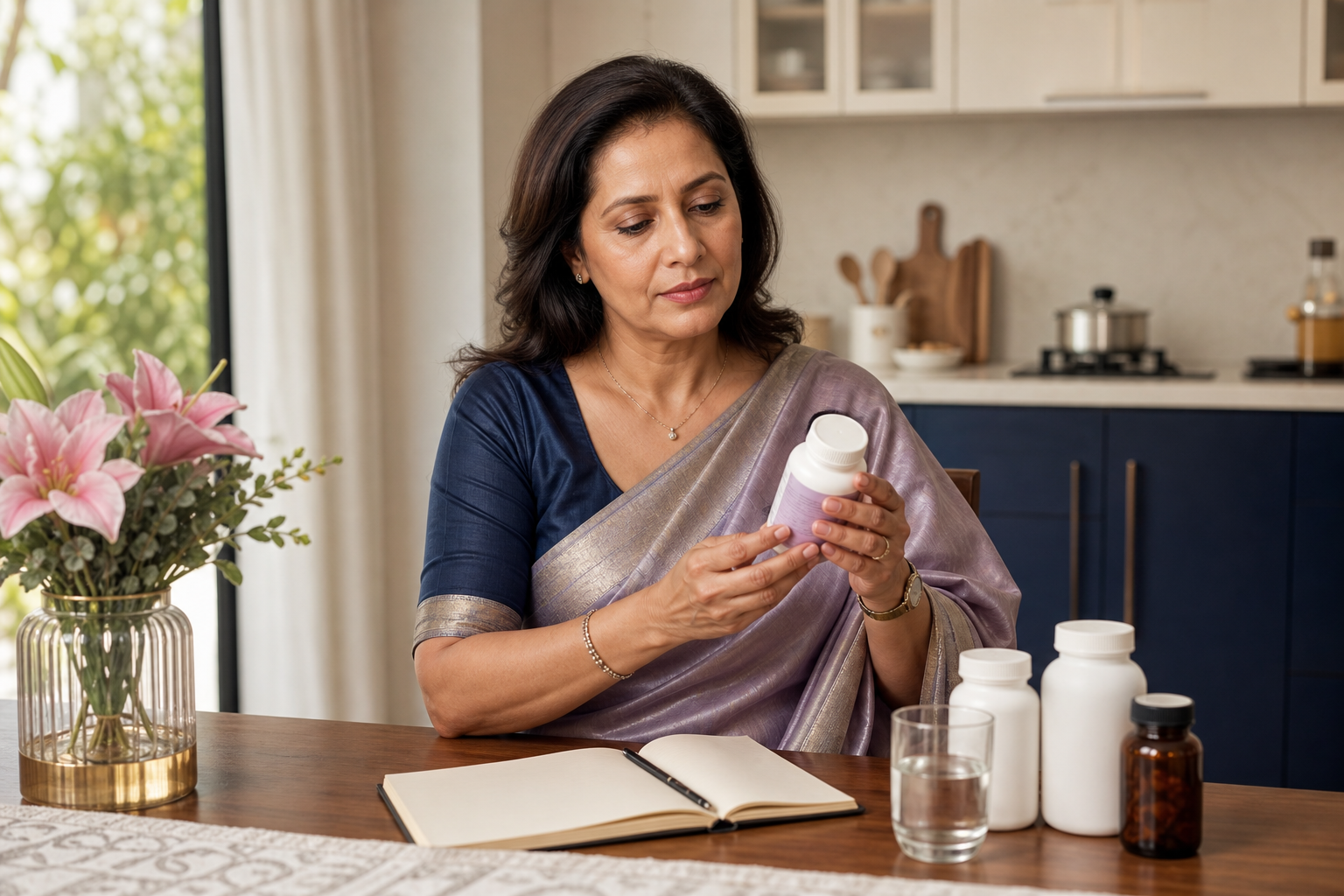
 Supplements
Menopause supplements: an evidence and safety guide for Indian women
A label-by-label guide to calcium, vitamin D, magnesium, soy, black cohosh, probiotics and weight-loss products, with interactions and quality checks.
Tap a card to reveal the answer. Start here, then read deeper whenever you are ready.
The short answer
There is no universal best menopause supplement. A vitamin or mineral can be valuable when it corrects a deficiency, fills a dietary gap or supports a defined treatment plan. That is different from a blend claiming to balance hormones, detoxify the body, stop every symptom and cause effortless weight loss. For hot flashes, most herbal and dietary products have inconsistent or modest evidence, and long-term safety is often uncertain.
Begin with a target. Are you treating documented vitamin D deficiency, low calcium intake, iron deficiency, or a symptom such as hot flashes? Write the ingredient, actual dose, expected benefit, start date, review date and possible interaction. If a product contains a proprietary blend that hides ingredient amounts, makes disease-cure claims or asks you to replace prescribed treatment, step away.
Calcium, vitamin D, iron and magnesium
Calcium and vitamin D support bone health, but supplements do not replace resistance exercise, protein, fall prevention and treatment of osteoporosis when indicated. Estimate calcium from food first. Excess supplemental calcium can cause constipation, interact with thyroid medicine and some antibiotics, and may be unsuitable with kidney stones or kidney disease. Vitamin D dose should reflect risk and, when appropriate, a measured level; repeated very high doses can cause toxicity.
Iron should not be taken indefinitely for tiredness without checking the cause. Heavy perimenopausal bleeding can produce iron deficiency, but fatigue also has many other explanations. Too much iron can harm and cause gastrointestinal symptoms. Magnesium is essential, yet routine supplementation is not proven to cure hot flashes or chronic insomnia. It can cause diarrhoea, accumulate in kidney disease and interact with several medicines.
Botanicals, soy and probiotics
Soy foods provide protein and can fit a healthy Indian diet. Soy or isoflavone supplements may offer a small reduction in hot flashes for some women, but results vary and concentrated extracts are not equivalent to tofu or soybeans. Black cohosh trials are inconsistent, products differ, and rare serious liver injury has been reported. Red clover, evening primrose, ashwagandha and multi-herb mixtures lack reliable evidence for broad menopause claims.
Probiotic products differ by strain, dose and condition studied. A general claim to reset menopause hormones or produce weight loss is not supported by simply stating billions of organisms on a label. Fermented foods can be part of a varied diet, but an active UTI, severe vaginal symptoms or persistent bowel change needs diagnosis. Women with immune suppression or serious illness should discuss live-microbe products with their clinical team.
Interactions and Indian quality checks
Supplements can alter bleeding, sedation, blood pressure, blood sugar, thyroid medicine absorption and liver metabolism. Calcium, iron and magnesium may need separation from levothyroxine and selected antibiotics. Herbal products can interact with anticoagulants, antidepressants, diabetes medicines and cancer therapy. Biotin can distort thyroid, hormone and cardiac laboratory results. Carry one complete list to every doctor and pharmacist.
In India, check the complete ingredient list, amount per serving, batch number, expiry, manufacturer and appropriate regulatory labelling. A licence or natural label does not prove clinical effectiveness. Avoid products sold only through testimonials, before-and-after photographs or secret blends. Buy one-ingredient products when a specific gap is being treated, use the lowest appropriate dose and set a stop or review date.
Weight-loss, hormone-balancing and compounded products
Thermogenic fat burners, laxative teas and online hormone-balancing powders can cause palpitations, dehydration, liver injury, sleep disruption and medicine interactions. A supplement cannot selectively remove menopause belly fat. Sustainable weight care protects muscle through adequate protein, resistance exercise, sleep treatment and an eating pattern that can continue. Unexpected or rapid weight change deserves medical assessment.
Compounded bioidentical hormones are medicines, not harmless supplements. Claims that saliva tests can precisely customise fluctuating hormones or that compounded products are inherently safer than regulated HRT are not supported by good evidence. If hormone therapy is appropriate, discuss a licensed formulation with known dose, quality and safety information. Report suspected adverse effects and stop relying on a product when benefit cannot be measured.
What the research tells us
The supplement aisle often speaks with more certainty than the evidence. A product may be natural and still interact with medicines, affect the liver, change bleeding risk or deliver a very different dose from the one studied. Before buying, identify the active ingredient, exact amount, intended outcome, quality testing, duration of use and a clear point at which you will decide whether it has helped.
Calcium and vitamin D are important for bone health, but more is not automatically better. Total intake includes food and supplements together. Kidney disease, kidney stones, parathyroid conditions and some medicines can change what is safe. Vitamin D needs also depend on baseline status and individual risk. A clinician can help decide whether testing is useful and whether a supplement should fill a measured gap.
Evidence for commonly marketed menopause botanicals is mixed. Black cohosh products vary in preparation and dose, and rare liver concerns have been reported. Phytoestrogen foods can be part of a balanced diet, but concentrated extracts are not equivalent to eating soy foods. Women with hormone-sensitive conditions or those taking tamoxifen or other long-term medicines should discuss any concentrated product with their treating team.
A current medication-and-supplement list is a simple safety tool. Include brand, ingredient, dose, frequency, reason, start date and who recommended it. Carry the same list to the doctor, dentist and pharmacy. If a product causes a new symptom, stop and seek advice when appropriate rather than adding another product to counter it. Supplements should solve a defined problem, not become an open-ended subscription.
A practical plan for menopause supplements: an evidence and safety guide for indian women
Review progress by function, not perfection. Ask whether you are sleeping a little better, thinking more clearly, moving with more confidence, experiencing less distress or returning to something that matters. Symptoms do not always disappear completely, and improvement may be uneven. A useful plan reduces burden and supports choice. If the issue is worsening, changing character or limiting daily life, that is information to bring back to a qualified professional.
Apply that approach specifically to menopause supplements: an evidence and safety guide for indian women. Decide on one outcome that matters to you, such as fewer interruptions, less discomfort, better confidence or a clearer medical conversation. Choose an action that is safe within your health history and current capacity. Keep the rest of your routine reasonably steady while you test it. After one or two weeks, look at the pattern rather than one unusually good or bad day.
Context matters in India. Heat, long commutes, multigenerational homes, caregiving, food traditions, privacy and uneven access to menopause-informed care can all change what is workable. Adapt the advice rather than abandoning it. A cotton layer, a short indoor movement session, a familiar protein-rich meal, a teleconsultation or a private phrase to ask family for space may be more sustainable than an imported routine built for a different life.
What to discuss with a health professional
Seek a clinical conversation when menopause supplements: an evidence and safety guide for indian women is new, severe, persistent, worsening or affecting sleep, work, relationships or safety. Take your symptom record and a complete list of medicines and supplements. Ask what common menopause-related mechanisms might fit, what other causes should be considered, whether tests are needed and which treatment options have evidence for someone with your personal risks and preferences.
Treatment decisions should be individual. Hormonal and non-hormonal options have different benefits, limitations and contraindications. Products marketed as natural can still have side effects and interactions. A qualified clinician can help weigh age, cycle stage, uterus status, breast and cardiovascular history, migraine, liver health, clotting risk and current medicines. Do not stop prescribed treatment or begin hormones based only on a general article.
Urgent symptoms should not wait for a routine menopause appointment. Seek prompt care for chest pain, fainting, sudden weakness or speech change, severe shortness of breath, a new severe headache, very heavy bleeding, bleeding after twelve months without a period, or thoughts of self-harm. Menopause can coexist with other conditions, and early assessment matters.
The Stri.life perspective
The purpose of learning about menopause supplements: an evidence and safety guide for indian women is not to monitor yourself anxiously. It is to make the experience less mysterious and give you better choices. You deserve information that acknowledges both biology and the reality of an Indian woman’s day. Read what is useful, leave what does not fit and return to the question as your body and circumstances change.
Menopause is not a disease, but symptoms can be significant and deserve care. You do not need to wait until life becomes unmanageable, and you do not need to justify wanting relief. Evidence, personal values and a respectful clinical relationship can sit together. A safe community can add recognition, while medical decisions remain between you and a qualified professional.
Come back to this guide on menopause supplements: an evidence and safety guide for indian women after you have observed your own pattern. The second reading is often more useful because you can separate what sounds familiar from what does not. Write down one question, one safe action and one sign that would prompt you to seek more help. Share the question with a clinician or someone you trust. Information becomes care only when it helps you make a clearer decision, ask for support or recognise that a change deserves attention. Stri.life will continue to review this article as menopause guidance develops, but your current symptoms and medical history should always guide the next step.
Frequently asked questions
What is the best supplement for menopause?
There is no universal best product. Supplements are most useful when they correct a defined deficiency or dietary gap.
Does magnesium treat hot flashes?
Magnesium is essential, but routine supplements are not proven to reliably treat hot flashes or chronic menopause insomnia.
Is black cohosh safe?
Evidence is inconsistent, products vary and rare serious liver injury has been reported. Review risks and interactions before use.
Do probiotics cause menopause weight loss?
No probiotic can be recommended simply for menopause weight loss. Effects are strain and condition specific.
How do I check a supplement label?
Look for exact ingredients and doses, batch, expiry and manufacturer. Avoid proprietary blends, cure claims and products that replace prescribed care.
Sources behind this guide
- NIH NCCIH: Menopausal symptoms and complementary approaches ↗
- NIH ODS: Calcium fact sheet ↗
- NIH ODS: Vitamin D fact sheet ↗
- NIH ODS: Magnesium fact sheet ↗
- The Menopause Society: 2023 nonhormone therapy position statement ↗
- FSSAI: Health supplements and nutraceuticals ↗
Editorial foundation: Stri.life research guides, Menopause in India Overview and Comprehensive Guide to Perimenopause, reviewed August 2026.
Conversation 0