 Health
Menopause and high blood pressure: risks, readings and treatment
Blood pressure often rises through midlife without obvious symptoms. Learn accurate home measurement, risk factors, treatment and emergency thresholds.
Tap a card to reveal the answer. Start here, then read deeper whenever you are ready.
What menopause changes and what it does not
Blood pressure commonly rises with age, and the menopause transition overlaps with changes in blood vessels, body composition, sleep and metabolic health. Lower oestrogen may contribute to vascular stiffness, but menopause is not the only cause and a high reading should not be dismissed as hormones. Family history, salt sensitivity, kidney disease, diabetes, medicines, alcohol, tobacco, stress and sleep apnoea all matter.
High blood pressure usually causes no reliable symptoms. Headache, flushing or dizziness cannot confirm it, and feeling well does not rule it out. Diagnosis is based on properly measured readings over time, sometimes with home or 24-hour monitoring. One high reading during pain or anxiety is information, not always a diagnosis, while repeated elevation deserves action.
How to measure blood pressure at home
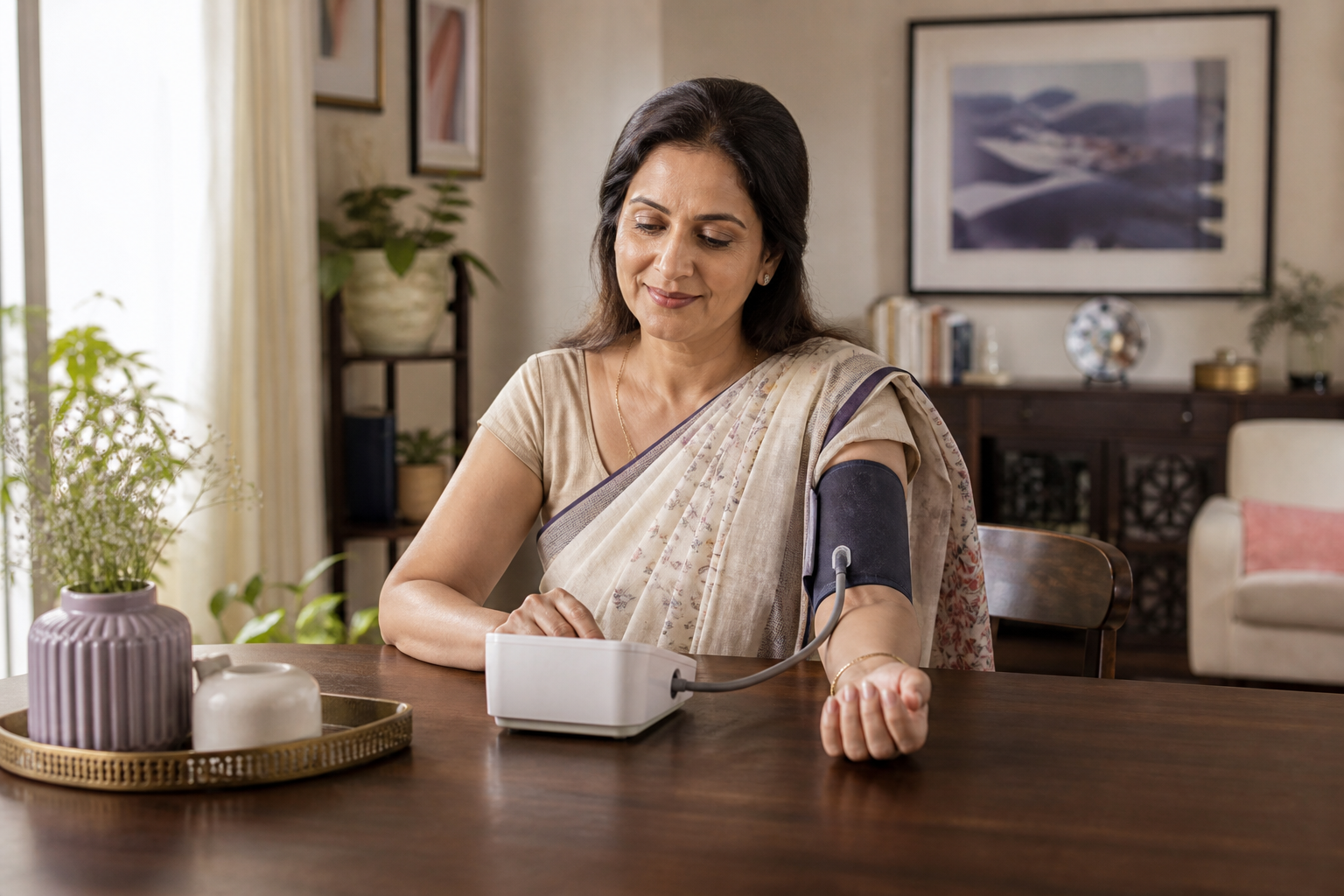
Use a validated upper-arm monitor with the correct cuff size. Avoid caffeine, exercise, smoking and a heavy meal for about thirty minutes beforehand. Empty the bladder, sit quietly for five minutes with back supported, feet flat and legs uncrossed, and rest the bare arm at heart level. Do not talk during the reading. Take two measurements about a minute apart and record both.
For a diagnostic home series, a clinician may ask for morning and evening readings over several days. Bring the monitor to an appointment occasionally to compare it with the clinic device. Wrist devices, a cuff over clothing, a cuff that is too small and measuring immediately after climbing stairs can mislead. Do not change prescribed medicine based on one home number without an agreed plan.
A complete cardiovascular review
Blood pressure belongs beside cholesterol, glucose, kidney function, waist trend, activity, sleep, smoking and family history. Indian women can develop cardiometabolic risk at lower body mass indices, so visual appearance is not a screening test. Ask about an overall risk estimate and whether tests or medicines are needed, rather than treating blood pressure as an isolated score.
Lifestyle support includes a varied eating pattern rich in vegetables, fruit, pulses, whole grains, nuts and appropriate protein, with less sodium from packaged snacks, pickles, papad, sauces and restaurant food. Regular walking and strength work, sufficient sleep, limited alcohol and tobacco cessation help, but medication is not a failure when risk or readings warrant it. Most people need sustainable changes rather than an extreme salt-free diet.
Medicines, HRT and urgent readings
Several effective blood-pressure medicine classes exist, and choice depends on kidney health, diabetes, swelling, heart rhythm, cough risk, potassium and other medicines. Adherence matters even when readings improve, because control often means treatment is working. Review pain medicines, decongestants, steroids, stimulants, some contraceptives and supplements that can raise pressure.
HRT is not a blood-pressure treatment. Uncontrolled hypertension should be assessed before systemic HRT, while route and overall cardiovascular risk influence prescribing. Seek emergency care for a very high reading accompanied by chest pain, severe breathlessness, weakness, speech or vision change, confusion, seizure or a sudden severe headache. Without emergency symptoms, repeat the reading calmly and follow the clinician's same-day advice rather than panicking or doubling tablets.
What the research tells us
Menopause is a useful moment for preventive health because oestrogen decline intersects with bone remodelling, body composition, blood pressure, lipids, glucose regulation and urogenital health. It does not suddenly create every later-life risk, but it changes the context in which existing risks operate. A thoughtful review therefore looks beyond symptom relief and asks what will support strength, mobility, cardiovascular health and quality of life over the next several decades.
Bone loss accelerates around the final menstrual period because bone-resorbing activity can exceed bone formation. Risk is shaped by age, early menopause, low body weight, family history, smoking, alcohol, steroid medicines, thyroid or parathyroid disease, previous low-trauma fracture and limited weight-bearing activity. Bone density testing is not automatically required for every woman at the same age. It is most useful when personal risk factors suggest the result could change management.
Cardiovascular risk also deserves direct attention. Blood pressure, cholesterol, diabetes, tobacco exposure, sleep, movement, family history and central body-fat changes matter more than any single menopause symptom. Hormone therapy is not prescribed simply to prevent heart disease. When it is considered for bothersome symptoms, age, time since menopause, clotting risk, liver health, migraine pattern and personal cancer history help shape the safest formulation and route.
Care should remain individual. For many healthy symptomatic women younger than 60 or within ten years of menopause, hormone therapy can have a favourable benefit-risk profile after proper assessment. Others prefer or require non-hormonal options. Vaginal dryness and urinary symptoms may respond to local therapies with much lower systemic exposure. Treatment choices should be reviewed over time as symptoms, priorities and health risks change.
A practical plan for menopause and high blood pressure: risks, readings and treatment
Make the first plan small enough to repeat. Choose one action for the coming week, decide when it will happen and define what success looks like on a difficult day. A five-minute action completed several times produces more useful feedback than an ambitious plan abandoned after one attempt. Review the result with curiosity: keep what helped, adjust what did not and avoid interpreting inconsistency as a character flaw.
Apply that approach specifically to menopause and high blood pressure: risks, readings and treatment. Decide on one outcome that matters to you, such as fewer interruptions, less discomfort, better confidence or a clearer medical conversation. Choose an action that is safe within your health history and current capacity. Keep the rest of your routine reasonably steady while you test it. After one or two weeks, look at the pattern rather than one unusually good or bad day.
Context matters in India. Heat, long commutes, multigenerational homes, caregiving, food traditions, privacy and uneven access to menopause-informed care can all change what is workable. Adapt the advice rather than abandoning it. A cotton layer, a short indoor movement session, a familiar protein-rich meal, a teleconsultation or a private phrase to ask family for space may be more sustainable than an imported routine built for a different life.
What to discuss with a health professional
Seek a clinical conversation when menopause and high blood pressure: risks, readings and treatment is new, severe, persistent, worsening or affecting sleep, work, relationships or safety. Take your symptom record and a complete list of medicines and supplements. Ask what common menopause-related mechanisms might fit, what other causes should be considered, whether tests are needed and which treatment options have evidence for someone with your personal risks and preferences.
Treatment decisions should be individual. Hormonal and non-hormonal options have different benefits, limitations and contraindications. Products marketed as natural can still have side effects and interactions. A qualified clinician can help weigh age, cycle stage, uterus status, breast and cardiovascular history, migraine, liver health, clotting risk and current medicines. Do not stop prescribed treatment or begin hormones based only on a general article.
Urgent symptoms should not wait for a routine menopause appointment. Seek prompt care for chest pain, fainting, sudden weakness or speech change, severe shortness of breath, a new severe headache, very heavy bleeding, bleeding after twelve months without a period, or thoughts of self-harm. Menopause can coexist with other conditions, and early assessment matters.
The Stri.life perspective
The purpose of learning about menopause and high blood pressure: risks, readings and treatment is not to monitor yourself anxiously. It is to make the experience less mysterious and give you better choices. You deserve information that acknowledges both biology and the reality of an Indian woman’s day. Read what is useful, leave what does not fit and return to the question as your body and circumstances change.
Menopause is not a disease, but symptoms can be significant and deserve care. You do not need to wait until life becomes unmanageable, and you do not need to justify wanting relief. Evidence, personal values and a respectful clinical relationship can sit together. A safe community can add recognition, while medical decisions remain between you and a qualified professional.
Come back to this guide on menopause and high blood pressure: risks, readings and treatment after you have observed your own pattern. The second reading is often more useful because you can separate what sounds familiar from what does not. Write down one question, one safe action and one sign that would prompt you to seek more help. Share the question with a clinician or someone you trust. Information becomes care only when it helps you make a clearer decision, ask for support or recognise that a change deserves attention. Stri.life will continue to review this article as menopause guidance develops, but your current symptoms and medical history should always guide the next step.
Frequently asked questions
Does menopause cause high blood pressure?
It may contribute to vascular and metabolic change, but age and many other risk factors overlap. Repeated readings determine the diagnosis.
What is the correct way to measure at home?
Rest five minutes, use a correct upper-arm cuff, keep feet flat and arm at heart level, and take two readings without talking.
Can I take HRT with hypertension?
Controlled hypertension does not automatically exclude HRT, but overall cardiovascular risk, route and dose require individual review.
Can supplements raise blood pressure?
Yes. Stimulants, decongestants and some herbal or weight-loss products can raise pressure or interact with medicines.
When is high blood pressure an emergency?
A very high reading with chest pain, breathlessness or neurological symptoms needs emergency care.
Sources behind this guide
- American Heart Association: High blood pressure in women ↗
- WHO: Hypertension ↗
- NICE: Hypertension in adults ↗
- Indian Guidelines on Hypertension ↗
Editorial foundation: Stri.life research guides, Menopause in India Overview and Comprehensive Guide to Perimenopause, reviewed August 2026.
Conversation 0