 Health
Adult acne and new facial hair in perimenopause: gentle care, treatment and red flags
Jawline breakouts and coarser chin hair can appear in midlife, but sudden changes need assessment. Build a skin routine that treats acne without stripping dry skin.
Tap a card to reveal the answer. Start here, then read deeper whenever you are ready.
Why skin can behave differently
Adult acne can begin or recur during perimenopause as hormone balance changes, often around the jawline and lower face. At the same time, falling oestrogen can make skin drier and more sensitive, so harsh teenage routines may cause irritation without clearing acne. Fine facial hair also commonly becomes more visible with age [1,2,3].
Thick dark hair on the face, chest or abdomen is hirsutism and can reflect androgen sensitivity, PCOS, medicines or, rarely, an adrenal or ovarian disorder. New acne plus irregular bleeding may deserve hormonal assessment. Do not assume every change is cosmetic or buy hormones online.
A barrier-friendly routine
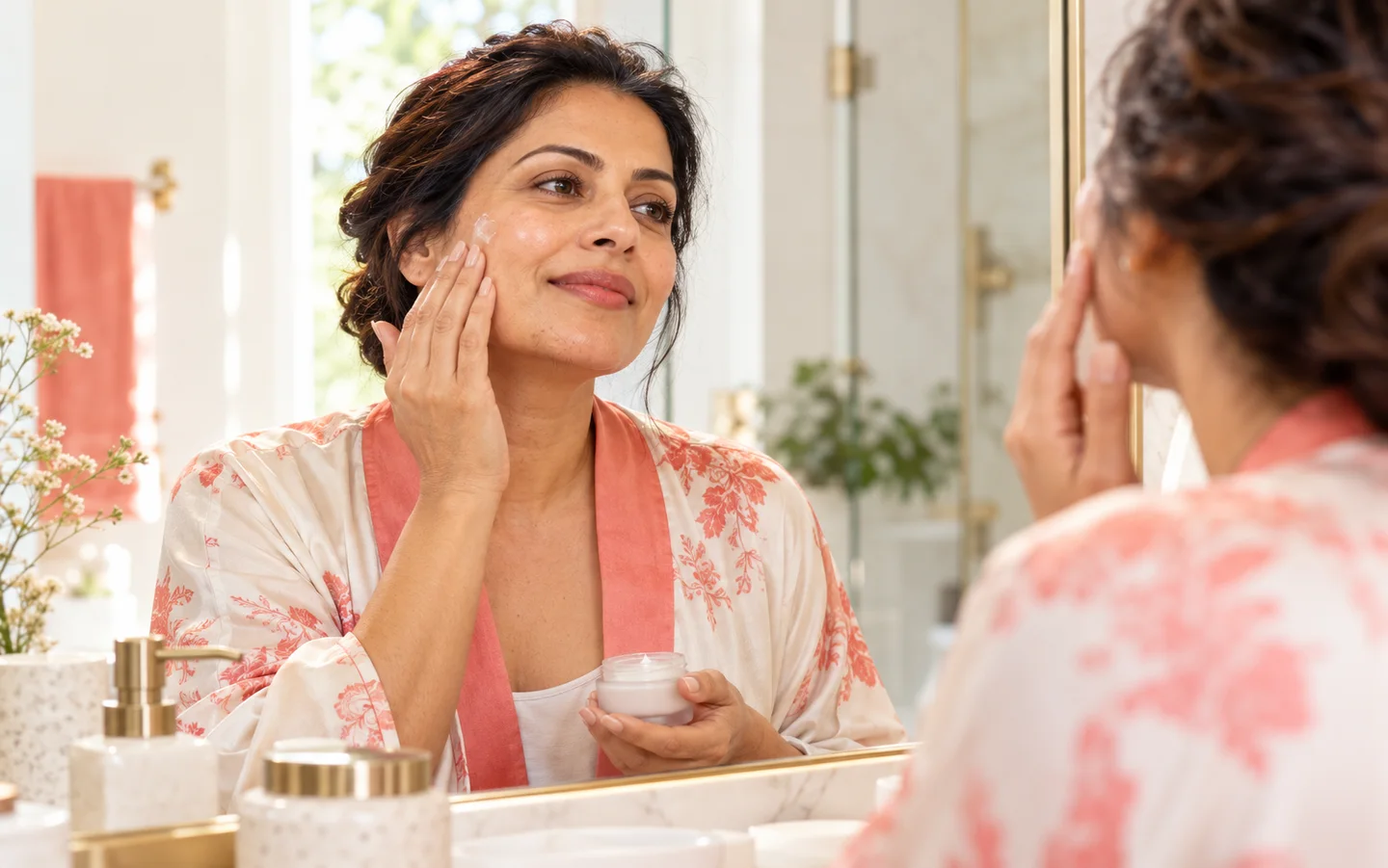
Start with a gentle cleanser, non-comedogenic moisturiser and broad-spectrum sunscreen. Add only one active product at a time. Salicylic acid can unclog pores; benzoyl peroxide reduces acne-causing bacteria; adapalene helps prevent blocked pores. Begin less often if skin is dry and avoid scrubs, lemon, toothpaste and repeated picking [1,4].
Retinoids are not suitable during pregnancy and may irritate sensitive skin. Perimenopause does not eliminate pregnancy possibility, so discuss contraception and pregnancy plans. Deep painful nodules, scarring, widespread acne or no improvement after a consistent trial needs dermatology care [4,5].
Prescription and hormonal options
Dermatologists may use topical antibiotics only with resistance-conscious combinations, oral antibiotics for limited courses, spironolactone, selected combined contraception or isotretinoin depending on severity and health. Spironolactone requires review of kidney disease, potassium, blood pressure, interactions and pregnancy prevention. Isotretinoin has strict pregnancy precautions [4,5].
HRT is prescribed for menopause indications, not as a primary acne medicine. Testosterone therapy can worsen acne or hair growth in some people, so report skin changes without stopping prescribed treatment yourself. The prescriber and dermatologist can coordinate dose, benefit and side effects.
Facial-hair removal and red flags
Shaving does not make hair grow back thicker. Threading, waxing, depilatory creams, laser and electrolysis are options, but sensitive or retinoid-treated skin can tear or pigment. Patch test products and use an experienced practitioner familiar with deeper skin tones, because laser settings affect burn and pigmentation risk [2,3].
Seek prompt assessment if thick dark hair appears rapidly with a deeper voice, increased muscle, scalp hair loss or clitoral change. These virilising signs are uncommon but can indicate marked androgen excess. Bring a timeline and complete medicine or supplement list, including gym products [3,6].
Frequently asked questions
Can perimenopause cause acne?
Hormone shifts can contribute, but products, medicines and other disorders may also matter.
Should I dry out acne?
No. Over-drying can damage the barrier and worsen irritation.
Does shaving thicken hair?
No. The blunt cut can feel coarse, but growth rate and thickness do not increase.
Can I use retinoids?
Discuss pregnancy possibility, dryness and other medicines before use.
When is facial hair urgent?
Rapid dark hair with voice deepening or other virilising signs needs prompt assessment.
Sources behind this guide
- AAD: Adult acne ↗
- AAD: Menopause skin care ↗
- NHS: Hirsutism ↗
- AAD: Adult acne treatment ↗
- NICE: Acne vulgaris management ↗
- Endocrine Society: Hirsutism guideline ↗
Editorial foundation: Stri.life research guides, Menopause in India Overview and Comprehensive Guide to Perimenopause, reviewed August 2026.
Conversation 0